
Embarking on the creative path of manga illustration can feel both exhilarating and daunting, especially when transitioning from traditional paper to the digital realm. For beginners eager to explore the boundless possibilities of drawing manga on a graphic tablet, understanding the fundamental tools and techniques is paramount. This journey not only involves selecting the right hardware and software but also mastering the art of layering, a technique that serves as the backbone of professional digital artwork. By learning to navigate these digital landscapes, aspiring manga artists can unlock a world where creativity meets precision, and where every stroke is an opportunity to refine their unique artistic voice.
Essential digital kit: selecting your graphic tablet and software foundation
Choosing the appropriate graphic tablet marks the first significant step in your manga creation adventure. The market offers a diverse range of options, each designed to cater to different skill levels and budgets. Among the most recognised brands, Wacom and XP-Pen stand out for their reliability and performance. Wacom tablets have long been celebrated for their superior build quality and pressure sensitivity, making them a favourite among professional artists. Their intuitive design and responsive pen technology allow for natural, fluid strokes that closely mimic traditional drawing. However, these premium features often come with a higher price tag, which might be a consideration for those just starting out.
On the other hand, XP-Pen has emerged as a compelling alternative, offering impressive functionality at a more accessible price point. Their tablets provide excellent pressure sensitivity and a comfortable drawing experience, making them ideal for beginners who wish to invest wisely without compromising on quality. When evaluating these devices, screen size becomes a crucial factor. Larger displays offer more workspace and can enhance the overall drawing experience, yet they also increase the cost. For those mindful of budget constraints, compact pad options deliver solid performance and portability, allowing artists to practise their craft anywhere. Whether opting for a screen tablet or a traditional drawing pad, ensuring compatibility with your preferred software is essential to maximise your creative potential.
Comparing Wacom and XP-Pen Tablets for Manga Creation
Delving deeper into the comparison between Wacom and XP-Pen, it becomes clear that each brand brings distinct advantages to the table. Wacom's extensive range includes models tailored specifically for manga illustration, featuring customizable buttons that streamline workflow and reduce the need to switch between tools constantly. The pen technology employed by Wacom is exceptionally refined, offering thousands of levels of pressure sensitivity that translate subtle variations in hand pressure into precise line weights. This feature is particularly valuable when rendering the delicate linework characteristic of manga, where varying thickness can convey emotion and depth.
XP-Pen, while perhaps less established in the professional arena, has rapidly gained a reputation for delivering high-quality tablets that rival their more expensive counterparts. Their models often come equipped with generous screen sizes and anti-glare surfaces, reducing eye strain during extended drawing sessions. The affordability of XP-Pen products does not mean a sacrifice in essential features; many of their tablets support tilt recognition and provide a battery-free stylus that mimics the feel of a traditional pen. For beginners, this balance of cost and capability makes XP-Pen an attractive entry point into digital manga creation, allowing them to develop their skills without a prohibitive initial investment.
Mastering Clip Studio Paint and Medibang for Manga Illustration
Once the hardware is in place, selecting the right software becomes the next pivotal decision. Clip Studio Paint has earned its status as the industry standard for manga artists, offering an extensive suite of tools specifically designed for comic and illustration work. Its interface is intuitive, yet powerful enough to handle complex projects involving multiple layers, tones, and effects. The software excels in managing linework, providing stabilisation features that smooth out shaky strokes and ensure clean, professional results. Additionally, Clip Studio Paint includes a vast library of brushes, screentones, and templates that cater to various manga styles, enabling artists to experiment and refine their technique with ease.
Medibang presents another excellent option, particularly for those seeking a free, cloud-based solution. This platform is lightweight and accessible, making it perfect for beginners who may not be ready to commit financially to premium software. Despite being free, Medibang does not skimp on essential features. It supports layer management, offers a variety of brushes, and includes tools for creating panels and speech bubbles, which are indispensable for manga production. The cloud functionality allows artists to work seamlessly across multiple devices, ensuring that inspiration can be captured and developed wherever it strikes. Both Clip Studio Paint and Medibang encourage learning through digital tools, providing tutorials and community support that help newcomers navigate the complexities of digital illustration and build confidence in their abilities.
Understanding layers: the core technique for professional manga artwork
Layers represent one of the most transformative concepts in digital art, fundamentally changing how artists approach illustration. Unlike traditional media, where every mark is permanent and mistakes can be costly, layers offer a non-destructive workflow that empowers artists to experiment freely. In manga creation, this technique is indispensable. By separating different elements of a drawing onto individual layers, such as rough sketches, clean linework, shading, and highlights, artists gain unparalleled control over each component. This separation not only simplifies the editing process but also allows for experimentation with colours, effects, and compositions without risking the integrity of the underlying artwork.
Understanding how to organise and utilise layers strategically can dramatically elevate the quality of your manga illustrations. A well-structured layer system enables you to isolate specific parts of your drawing, making adjustments swift and precise. For instance, if the facial expression of a character requires refinement, you can edit that particular layer without affecting the background or clothing details. This flexibility is especially valuable during the iterative stages of manga production, where characters and scenes often undergo multiple revisions. Moreover, layers facilitate collaboration and feedback, as different aspects of the artwork can be reviewed and modified independently, streamlining the creative process and fostering a more dynamic workflow.
Building your manga through strategic layer organisation
Effective layer organisation begins with a clear plan. Before diving into the drawing itself, consider the structure of your manga page and how different elements will interact. Start by creating a base layer for your initial sketch, where rough outlines and composition are established. This foundational layer serves as a guide, allowing you to experiment with character placement, panel layouts, and perspective without committing to final lines. Once satisfied with the composition, add a new layer above the sketch for clean linework. This separation ensures that your final lines remain crisp and can be refined without interference from the underlying rough draft.
As your illustration progresses, continue to add layers for each distinct element. Dedicate separate layers to characters, backgrounds, speech bubbles, and special effects. Within character layers, further subdivision can be beneficial; for example, one layer for the face, another for hair, and yet another for clothing. This granular approach provides maximum flexibility, enabling you to adjust individual features with precision. Additionally, using adjustment layers for shading and highlights allows you to experiment with lighting and mood without permanently altering the base colours. By maintaining a logical hierarchy and clearly labelling each layer, you create an organised workspace that enhances efficiency and reduces the likelihood of errors. This strategic layer organisation is a hallmark of professional manga artwork, transforming the creative process into a more intuitive and controlled experience.
Practical Layer Workflow from Sketch to Final Linework
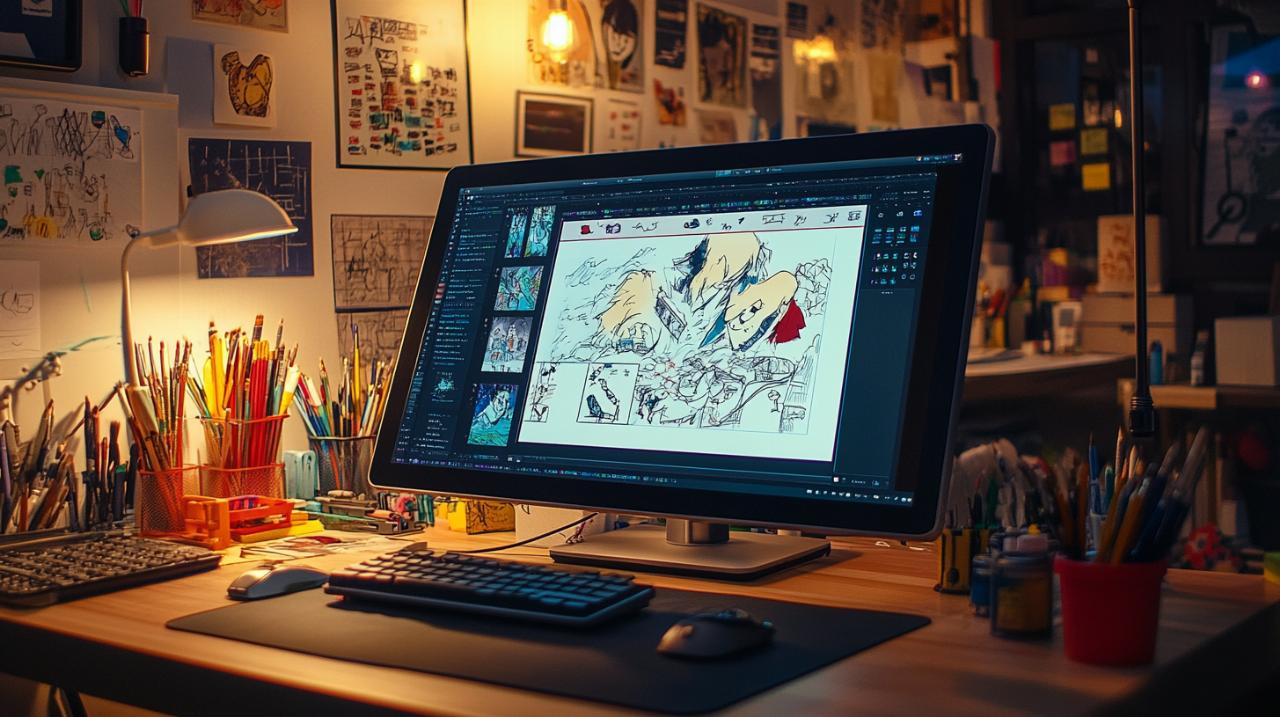
Translating your initial sketch into polished final linework is a critical phase in manga creation, and layers are your greatest ally in this transition. Begin with your rough sketch layer set to a low opacity, allowing it to serve as a guide without dominating the canvas. Create a new layer specifically for inking, selecting a brush that offers the pressure sensitivity and line variation essential for expressive manga art. As you trace over the sketch, focus on confident, deliberate strokes, knowing that the underlying layer can be hidden or deleted once the final lines are complete. This method not only improves the quality of your linework but also builds confidence, as the freedom to erase and redraw without consequence encourages experimentation.
Once the linework is finalised, the next step involves adding depth and dimension through shading and colour. Create additional layers beneath the linework layer for base colours, ensuring that your lines remain prominent and unaltered. Use clipping masks or layer modes to apply shadows and highlights, maintaining control over each tonal element. This layered approach allows for nuanced adjustments; you can tweak the intensity of shadows, shift colour palettes, or add atmospheric effects with ease. The iterative nature of this workflow mirrors traditional techniques while offering the unparalleled advantage of non-destructive editing. By moving methodically from sketch to final linework and then to colouring, you develop a disciplined process that enhances both the quality and consistency of your manga illustrations.
Optimising your digital workspace: pressure sensitivity and display considerations
Creating manga on a graphic tablet extends beyond merely selecting hardware and software; it involves fine-tuning your digital workspace to match your artistic needs. Pressure sensitivity stands as one of the most crucial settings to configure, as it directly influences the responsiveness and naturalness of your brush strokes. Most graphic tablets, including those from Wacom and XP-Pen, offer customizable pressure curves that determine how the tablet interprets the force applied by the stylus. A softer curve means lighter pressure yields thicker lines, ideal for expressive, dynamic strokes, while a firmer curve requires more force, providing greater control for detailed work. Experimenting with these settings helps you discover a configuration that feels intuitive, ultimately making your digital drawing experience as seamless as working with traditional pen and ink.
Display considerations also play a vital role in optimising your workspace. Screen size affects not only the amount of visible canvas but also your posture and comfort during long drawing sessions. Larger displays reduce the need for constant zooming and panning, allowing for a more holistic view of your composition. However, budget-friendly pad options remain a practical choice for beginners. These devices, though lacking an integrated screen, connect to your computer monitor and offer the same pressure sensitivity and precision as their display counterparts. Adjusting to drawing on a pad while looking at a separate screen requires practice, yet many artists find this setup preferable due to its ergonomic benefits and lower cost. Ensuring that your tablet drivers are up to date and properly calibrated further enhances performance, reducing latency and improving the accuracy of your stylus input. By paying attention to these technical details, you create an optimised environment that supports your creative ambitions and fosters steady progress in your manga illustration journey.
Configuring pen pressure settings for natural brush strokes
Achieving natural, fluid brush strokes hinges on the precise calibration of pen pressure settings. Each artist has a unique touch, varying from light and delicate to firm and assertive, and configuring your tablet to respond accurately to your style is essential. Most graphic tablet software includes a pressure sensitivity test and adjustment tool, allowing you to map your natural drawing pressure to the desired line output. Start by drawing a series of strokes with varying force, observing how the tablet interprets each level of pressure. If the lines feel too thin or too thick relative to your input, adjust the pressure curve accordingly. A well-calibrated system responds predictably, giving you confidence that your artistic intent will be faithfully reproduced on screen.
Beyond basic pressure settings, advanced features such as tilt recognition and pen rotation can further enhance your digital drawing experience. Tilt sensitivity allows the angle of the stylus to affect the shape and opacity of your brush strokes, mimicking the behaviour of traditional media like charcoal or brush pens. This feature is particularly useful in manga illustration, where varied line weights and textures contribute to the overall aesthetic. Experimenting with different brushes and settings within your chosen software reveals the full potential of your tablet, enabling you to develop a personalised toolkit that aligns with your artistic vision. Regular practice and adjustment ensure that your digital workspace remains a natural extension of your creativity, empowering you to produce manga artwork that is both technically proficient and artistically compelling.
Screen Size and Budget-Friendly Pad Options for Beginners
For beginners navigating the world of digital manga creation, balancing quality and affordability is a common challenge. Screen size often emerges as a key consideration, influencing both the drawing experience and the overall cost of the setup. Tablets with integrated displays provide immediate visual feedback, allowing artists to draw directly on the screen, which can feel more intuitive and similar to traditional drawing. However, these display tablets tend to be more expensive, and their larger sizes may not always fit comfortably into a beginner's workspace or budget. For those seeking a cost-effective entry point, pad tablets without a built-in screen offer an excellent alternative. These devices, connected to a computer monitor, deliver the same level of pressure sensitivity and precision, enabling artists to develop their skills without a significant financial commitment.
Budget-friendly pad options from reputable brands like XP-Pen and Wacom provide robust performance suitable for learning and experimentation. These tablets often include customizable shortcut buttons and a responsive, battery-free stylus, features that streamline the drawing process and reduce reliance on keyboard commands. While adapting to the indirect drawing method, where your hand moves on the pad but your eyes focus on the monitor, may take some practice, many artists find this setup comfortable and effective once accustomed. Additionally, the portability of smaller pad tablets makes them ideal for artists who wish to practise on the go, fitting easily into a backpack alongside a laptop. By investing in a reliable, affordable tablet and dedicating time to mastering its features, beginners can build a solid foundation in digital manga illustration, setting the stage for future growth and more advanced equipment as their skills and ambitions expand.