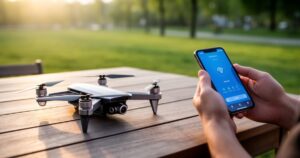
Losing sight of your drone mid-flight is a heart-sinking moment that many pilots know all too well, but a missing aircraft doesn't have to mean a permanent goodbye. With the right combination of technology, community support and a bit of patience, most lost drones can be traced and brought home safely. This guide walks through the practical steps for locating a wayward drone, from digital tracking tools to old-fashioned legwork on the ground.
At a glance
- Check your drone's companion app immediately to access flight logs and pinpoint the last recorded GPS coordinates before signal loss.
- Analyze the drone's battery level and wind conditions at the time of disconnection to estimate a more precise landing zone beyond the last coordinates.
- Leverage the supportive drone community via forums and local clubs to share incident details and potentially gain assistance from experienced pilots or thermal imaging equipment.
- Install a dedicated drone tracker device that functions independently of the aircraft's main electronics to ensure real-time location monitoring.
- Minimize the risk of loss by flying in open, unobstructed areas and verifying that your return-to-home and failsafe settings are correctly configured.
- Consult your insurance policy for recovery support options and familiarize yourself with advanced app features like flight history to ensure a swift response in an emergency.
Utilising GPS Technology and Mobile Applications for Drone Recovery
The first port of call when a drone vanishes from view should always be the GPS application tied to your device. Most modern drones log their flight path in real time, meaning the companion app on your phone or tablet likely holds the final coordinates before contact was lost. Opening this app straight away, rather than panicking and searching blindly, gives you a genuine head start, as the data recorded is usually accurate to within a few metres.
Leveraging gps applications to pinpoint your drone's location
Within the flight log, you'll typically find a map overlay showing the exact route your drone took, along with a marker for its last transmitted position. It's worth zooming in carefully on this final point, as drones often continue moving slightly after signal loss, whether due to wind drift or an automatic return-to-home sequence kicking in. Cross-referencing this data with satellite imagery of the area can help you identify obstacles such as tall trees, rooftops or dense hedgerows where the aircraft might have become lodged.

Examining Last Known Position and Battery Status to Refine Your Search
Battery level at the point of disconnection is another clue that shouldn't be overlooked. If your drone was running low on power, it's reasonable to assume it descended not long after losing contact, which narrows your search radius considerably. On the other hand, if the battery still had plenty of charge remaining, the aircraft may have kept flying for some time, potentially carrying it well beyond the last recorded coordinate. Factoring in wind speed and direction at the time can help you estimate a more realistic landing zone rather than assuming it dropped straight down.
Community engagement and advanced tracking solutions
When digital breadcrumbs aren't enough on their own, turning to fellow enthusiasts and specialist equipment can make all the difference. The drone hobby has a remarkably supportive network of people who've faced the same predicament and are often keen to lend a hand or share advice.
Connecting with the Drone Community for Search Assistance and Expert Advice
Online forums, local flying clubs and social media groups dedicated to drones are goldmines of practical wisdom. Posting details of your incident, including the model, last known area and circumstances of the loss, can prompt other pilots to offer suggestions or even join a physical search if they're nearby. Some communities have members experienced in thermal imaging or have access to their own drones fitted with cameras, which can be flown over difficult terrain to spot a downed aircraft that would otherwise be impossible to see from the ground.

Implementing dedicated drone tracker devices for real-time location monitoring
For pilots who fly regularly in remote or challenging locations, investing in a dedicated drone tracker is a sensible precaution. These small devices attach to the aircraft and transmit their position independently of the drone's own systems, meaning even if the main electronics fail completely, you'll still have a signal to follow. Many trackers pair with a smartphone app that shows live coordinates, and some even work over long distances using cellular networks rather than relying solely on short-range radio signals.
Preventative measures and recovery support options
While knowing how to search for a lost drone is invaluable, reducing the likelihood of losing one in the first place is equally important. A combination of sensible flying habits and awareness of available support schemes can save considerable stress down the line.

Establishing safe flying practices and control connection settings
Choosing open, unobstructed areas for flights significantly lowers the risk of your drone disappearing behind buildings or into thick woodland. It's also worth taking time to review your control connection settings before every flight, ensuring that failsafe behaviours such as return-to-home are correctly configured and that the home point has been accurately set. Some pilots make a habit of double-checking signal strength indicators and only flying within a comfortable range of their controller, which further reduces the chance of an unexpected disconnection.
Exploring Insurance Coverage and DJI Fly App Features for Enhanced Recovery
If the worst does happen, it's worth checking whether your drone insurance policy covers loss or theft, as many providers offer support that extends beyond simple financial compensation, sometimes including guidance on recovery steps. For those flying DJI models, the DJI Fly app often proves particularly useful, offering detailed flight records and location history that can be reviewed even after the connection has dropped. Taking a few moments to familiarise yourself with these features before you ever need them means that, should disaster strike, you'll be equipped to act quickly and calmly rather than scrambling to learn the system under pressure.