
Spanish home cooking offers a remarkable journey through generations of culinary wisdom, where simple ingredients transform into memorable meals that bring families together. The warmth of a Spanish kitchen extends far beyond the stove, inviting everyone to share in the preparation and enjoyment of dishes that have been perfected over centuries. This approach to food celebrates not only the flavours themselves but also the communal spirit that defines the Spanish way of life, making every meal an occasion to savour and remember.
The heart of spanish home kitchens: regional cooking traditions
Spain's diverse geography creates a tapestry of culinary traditions that capture the essence of culinary traditions passed down through generations. Each region boasts its own distinctive character, shaped by local ingredients and historical influences that have moulded the way families cook and eat together. From the sun-drenched coasts to the rugged interior, Spanish home cooking reflects the land itself, offering a window into the soul of each community and the pride they take in their gastronomic heritage.
Coastal delights: mediterranean and atlantic influences
The coastal regions of Spain draw their inspiration from the bounty of the sea, where fresh seafood plays a starring role in everyday meals. Mediterranean shores offer dishes infused with the brightness of olive oil, tomatoes, and aromatic herbs, while the Atlantic coast brings robust flavours from shellfish and fish prepared with simple yet effective techniques. Paella, perhaps the most iconic of Spanish dishes, originates from Valencia and showcases the marriage of rice with seafood or meat, saffron, and vegetables in a dish that serves as the centrepiece of family gatherings. Along the northern coast, txangurro, a rich spider crab preparation, demonstrates the reverence for quality ingredients and the skill required to honour their natural flavours. These coastal recipes emphasise freshness and purity, allowing the ingredients to speak for themselves whilst celebrating the connection between the Spanish people and their maritime heritage.
Inland treasures: castilian and andalusian family recipes
Moving inland, the cuisine shifts to hearty, warming dishes that reflect the agricultural abundance of the plains and the mountain regions. Castilian cooking is renowned for its roasts and stews, such as cocido madrileño, a nourishing chickpea and meat stew that gathers families around the table during cooler months. Andalusia, with its Moorish influences, brings a different palette to Spanish home cooking, featuring gazpacho, a chilled tomato soup that refreshes during scorching summers, and a variety of tapas that encourage sharing and conversation. Tortilla española, the beloved potato omelette, transcends regional boundaries and appears on tables throughout Spain, embodying the simplicity and satisfaction of traditional home cooking. These inland recipes often incorporate legumes, potatoes, and vegetables, making many dishes naturally vegetarian or easily adapted to vegan-friendly variations, thus promoting healthy eating without sacrificing flavour or tradition.
Essential Ingredients and Techniques in Traditional Spanish Cooking
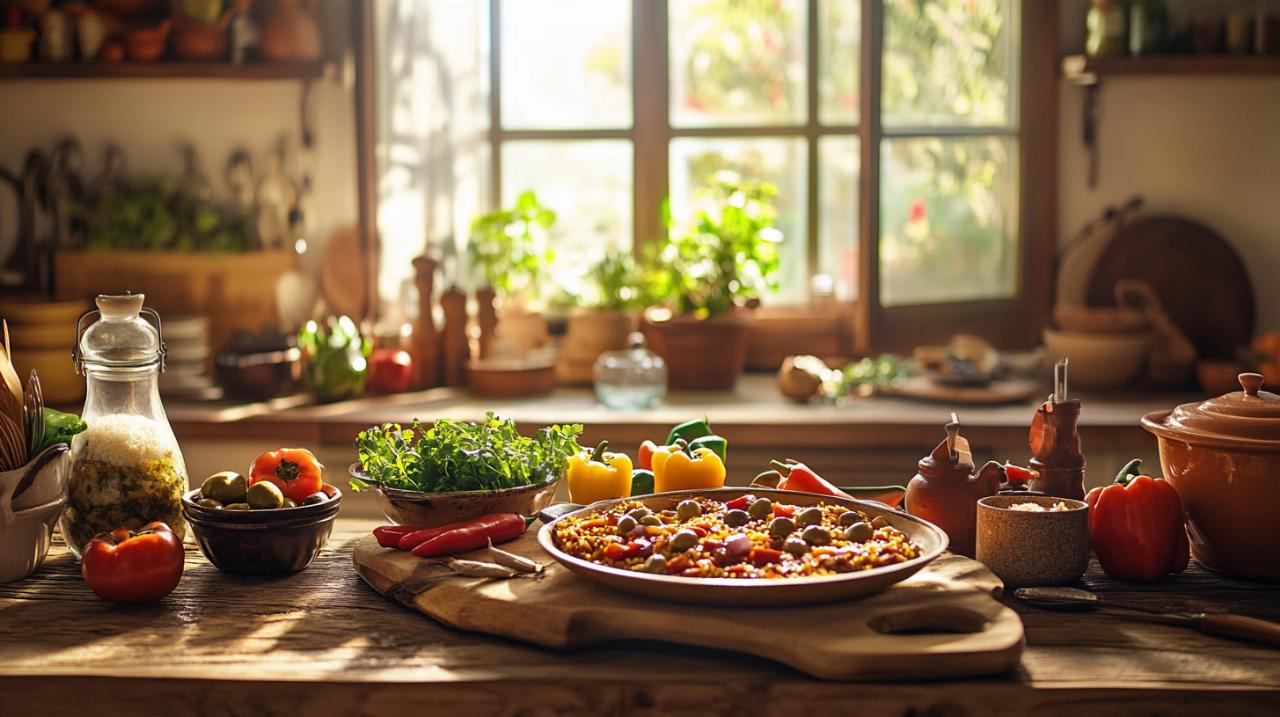
The magic of Spanish home cooking lies not in elaborate preparations but in the quality of ingredients and the respect for time-honoured methods. Spanish cooks understand that a few exceptional components can create extraordinary results, and they select their staples with care and knowledge passed down through family lines. This philosophy extends to the techniques employed, which favour patience and attention over speed, resulting in dishes that reward both the cook and those fortunate enough to gather around the table.
The cornerstone elements: olive oil, saffron, and fresh produce
Olive oil reigns supreme in Spanish kitchens, serving as the foundation for nearly every dish and imparting a distinctive richness that defines the cuisine. Spain produces some of the finest olive oils in the world, and home cooks use them liberally for frying, sautéing, and finishing dishes with a drizzle that adds depth and character. Saffron, though used sparingly due to its precious nature, transforms rice dishes and stews with its unmistakable colour and subtle flavour, elevating simple ingredients to celebratory status. Fresh produce forms the backbone of Spanish cooking, with tomatoes, peppers, garlic, and onions appearing in countless preparations, whilst seasonal vegetables ensure that menus change with the rhythm of the year. The emphasis on natural, mostly unprocessed ingredients aligns with contemporary desires for healthy eating, proving that traditional methods have always prioritised wellbeing alongside taste. Markets remain the preferred shopping destination for many Spanish families, where they select the freshest ingredients and maintain connections with local producers who share their commitment to quality.
Time-honoured methods: slow cooking and family gathering meals
Spanish home cooking embraces the art of slow preparation, allowing flavours to develop fully and ingredients to soften into harmonious unity. Stews simmer gently for hours, roasts take their time in the oven, and even quick dishes like scrambled potatoes with chorizo benefit from careful attention rather than hurried execution. This approach reflects a broader cultural attitude that values the process of cooking as much as the final result, turning meal preparation into a meditative practice that offers respite from the demands of modern life. Family gathering meals hold particular significance in Spanish culture, where social connections are strengthened over shared plates and extended conversations. Sunday lunches often stretch for hours, with multiple courses appearing in leisurely succession, accompanied by wines from renowned regions like Rioja and punctuated by desserts such as crema catalana or churros dipped in thick chocolate. These gatherings reinforce the idea that food serves not merely as sustenance but as a vehicle for maintaining relationships and creating memories that endure across generations. The recipes themselves become living documents, adapted and refined by each cook whilst retaining the essential character that links them to their origins. Whether preparing albóndigas, tender meatballs in tomato sauce, or a simple yet satisfying chicken and chorizo paella, Spanish home cooks continue to demonstrate that authentic flavours emerge from respect for tradition, quality ingredients, and the willingness to invest time in creating something truly special.